About Me
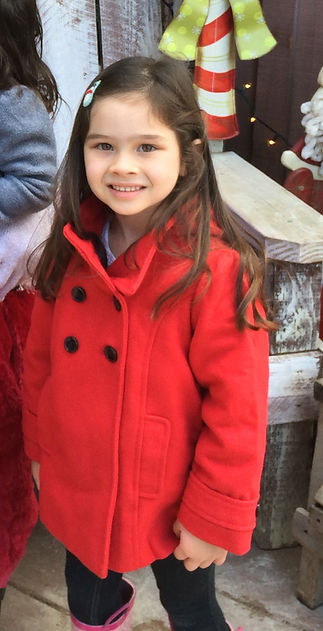
My name is Cate Pedrotti and I am a student at Arroyo Grande High School. I am 1/4 Japanese and I am very proud of my culture. Throughout my years in high school, and throughout the years of my life, I have noticed little about Japanese American Incarceration is talked about or known about in my school and in my community. After doing some research I found that the Japanese American community in Arroyo Grande was over 40% of the overall population in the city in the late 1930s before WWII. My community is an important part of my life, and I want my community to feel as though they know about Arroyo Grande's historical past. This is why I have decided to create this website and self-guided walking tour. In addition to the stories linked to sites in this website about Arroyo Grande, down below you will find MY family's story in regards to Japanese American Incarceration. (Did not take place in Arroyo Grande).


Our Story
At the turn of the century, the Teramoto Family arrived by boat to the United States. My mother's great-great-grandfather owned a shipping business. His daughter, Yoshino, was a large help to the business, even though she was only 8 years old, as she quickly learned to read, write, and speak English in school. Sometime later, the family was able to buy a hotel to continue business. The hotel was called Yasuhara Hotel and was located in Japantown in Los Angeles. When the war broke out in the 1940s, the family lost absolutely everything. Yoshino, now an adult , and her family were forced out of their home into the Santa Anita race track for the first relocation before they were sent off to the internment camps. Yoshino had 5 children: Kumazo, Shiro, Takeo, Motoe, and Setsuko. Kumazo’s wife, Ayako (my mother’s grandmother) used to talk about the way that the showers at Santa Anita were built for horses in the race track, so they were too tall for the water to hit a person correctly, particularly a very small woman like herself. Once relocated, the majority of the Teramotos were incarcerated with others at Heart Mountain where they lived together in a small barrack for 3 long years.
When the war was over, the Teramotos had lost everything. In addition to their hotel and business being gone, all their personal items that were deemed "unessential" to bring to camp were gone. The family had tried to save some dishes and other belongings in the bottom floor of their hotel, but when they returned the hotel had been ransacked and claimed by another owner. Since Yoshino was not a U.S. citizen, she had no recourse to reclaim her property. My mother’s grandmother once commented to her, upon her own wedding, that she had lost her beautiful wedding dress, and wedding china at that time. Eventually, enough money was pooled to get back on their feet. Yoshino's husband, Gitaro, and their adult sons bought a piece of property with 3 little houses and a shared backyard that they lived in until they died. Additionally, because the entire family was not incarcerated together at Heart Mountain, Yoshino insisted on the entire family living on that site, despite the small size, so that they would be close to one another and sent to the same place if the Internment ever happened again. Years later, one brother moved two houses down, but all the brothers and their families lived together on the same street until they died. Some of my family still lives on that same street today. The youngest of the siblings, a sister named Setsuko, lived with her husband nearby and when her children grew up, they also lived close to one another, the two sisters waiting for two houses to be available on the same street so that they could still be together.
A large take-away from this story is that many of the older generation never talked about the camps, even with their children. It may have felt embarrassing or humiliating to be doubted so strongly by a country they'd grown up in as citizens, particularly because their honor was being questioned unfairly and honor is a main pillar of the Japanese culture. However, the family did begin to talk about the camps again when the great grandchildren learning about this history in school, and started asking questions, and as more focus was being centered around the discrimination faced by this community. My mom remembers going through the Japanese American National Museum in Los Angeles when it first opened with her grandmother, Ayako, pointing out pictures of her friends in many of the exhibit photos. This really shows the importance of remembering history, asking questions and being interested in the past so that future generations will be even more educated and curious than previous generations. It also may have allowed these older generations to start to heal as they talked more about their traumatic experience.